
We have launched the first public Orbiplex editorial experiment: a blog devoted to the Bielik model, run as a federated swarm of several independent nodes.
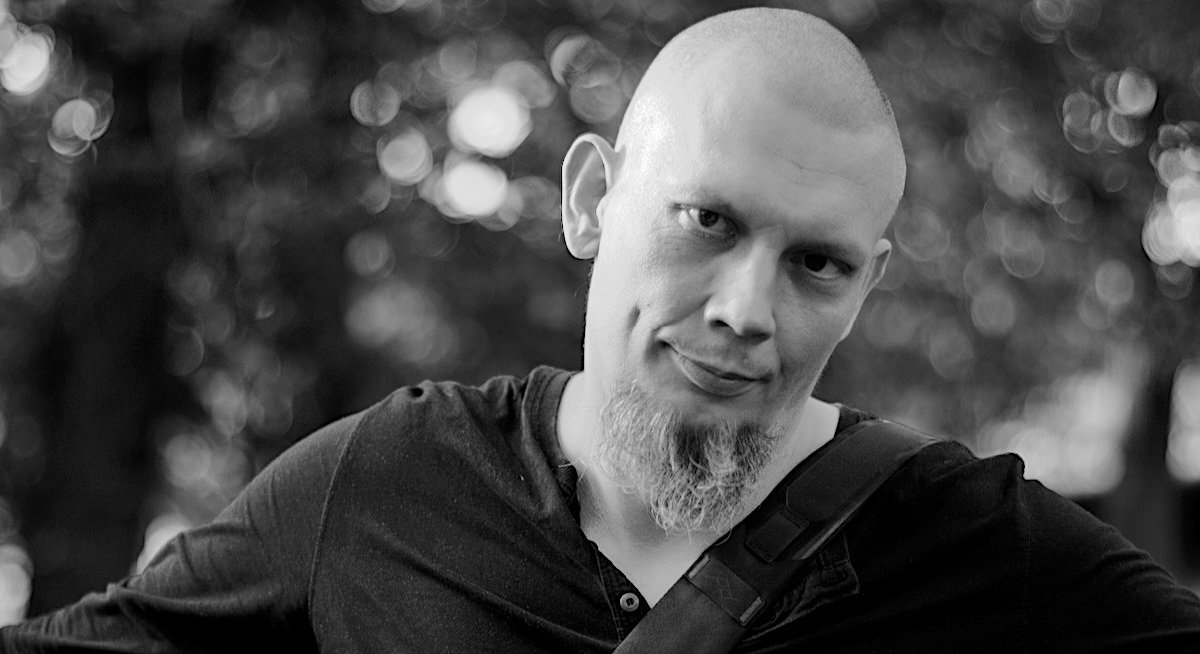
Paweł is the originator of Orbiplex and one of the project’s co-founders. Beyond work on the project’s constitutional foundations and architecture, he finds himself at home solving technical problems.
Since 1997, he has been involved in free software projects, including PLD Linux and GNU, and between 2002 and 2015 he was involved in digital forensics and IT security projects.
Since 2016, he has been professionally involved in eDiscovery (a branch of digital forensics), focusing on automating repetitive processes and operating systems that process electronic evidence. In eDiscovery, he values verifiability, honest description, and responsibility for consequences, so that facts can be understood independently of role, language, and context.
He is also a co-founder and the author of the name SpeakLeash (Spichlerz), a Polish community initiative building datasets and large language models, including the Bielik family.
In work and projects, he combines multiple perspectives: on one hand, he values verifiability, standardization, contracts, and mechanisms; on the other, quality of experience, the meaning of context, and precision of description. The approach closest to him is “check how it works” rather than declarative certainty.
In his essay AI and Consciousness, he emphasizes the importance of “perspective engineering” - the shift from implementation alone to the design of intention, quality criteria, and responsibility for outcomes. In AI, he feels close to open and enactive approaches because they increase auditability, knowledge sharing, resilience, and the technological agnosticism of the ecosystem.
Paweł grew up in the Free Software community - a modern manifestation of the so-called gift culture, where social status depends on voluntary contributions to the common good rather than on possessions or dominance over others.
Beyond free software, he feels close to the values present in craft cultures, the culture of experimentation, and contemporary participatory communities organized around pragmatic contemplative paths based on direct insight (for example AtR), while retaining a rational, engineering-oriented filter.
He is a communitarian: he believes that micro-communities and voluntary exchange within them can be a good implementation of economic and cultural freedom. He also considers the freedom to share knowledge and the freedom of access to information to be essential qualities. In practice, he is anti-authoritarian - he values responsibility and principled conduct, yet does not recognize authority that is not grounded in the needs of all involved parties.
He builds his work and relationships at the intersection of three axes: cultural, introspective, and engineering. Each matters to him: culture expands imagination and language, introspection orders intention and deals with fundamental questions, and engineering makes it possible to turn what one wants to express into action.
One of his most important practices is translation between different vocabularies used to describe the world. He is interested less in the victory of one narrative and more in a synthesis that can be tested in practice: from intention, through contract, to a working result. This lets him speak about meaning and immediately translate it into work structure, technical decisions, and concrete tools.